
Menopausal Hormone Patches
How to apply, where to place, and how to rotate your hormone therapy patch
What Are Hormone Patches?
Menopausal hormone therapy (MHT) patches are small, adhesive patches worn on the skin that release oestrogen (and sometimes progesterone, in combined patches) steadily through the skin into the bloodstream. They are a convenient and effective alternative to gels or tablets.
🌿 Combined vs oestrogen-only patches
If you have a uterus and are using an oestrogen-only patch, you will also need a separate progesterone (such as Prometrium). Combined patches (containing both hormones) may eliminate this need — ask your doctor which type you have.
Where to Apply the Patch
✅ Recommended sites
Lower abdomen (below the navel)
Upper outer buttocks
Clean, dry, flat skin away from folds
❌ Avoid applying to
Breasts or near the bra line
Waistband area (rubbing causes the patch to peel)
Skin that is irritated, oily, or recently shaved
Same spot as your previous patch
How to Apply – Step by Step
Prepare the skin
Clean and dry the application site. Do not use moisturiser, body lotion, or powder on the area beforehand.
Open the pouch
Tear open the foil pouch along the cut edge. Remove the patch carefully.
Peel the backing
Peel off the protective backing paper from the patch, taking care not to touch the adhesive surface.
Apply and press
Press the patch firmly onto the skin with your palm for 10 seconds. Make sure all edges are stuck down.
Check the seal
Run your finger around the edge of the patch to ensure it is fully adhered. Press any lifting corners firmly.
Rotate the site
With each new patch, choose a different area of skin. Wait at least one week before re-using the same spot.
Patch Change Frequency
Patches are available in two change schedules. Your prescription label and doctor's instructions will tell you which applies to you:
| Frequency | How often to change | Days worn per patch |
|---|---|---|
| Twice weekly | Change every 3–4 days (e.g. Monday & Thursday) | 3–4 days |
| Once weekly | Change on the same day each week | 7 days |
📋 Check your prescription
Available patch brands change over time. Always follow the change schedule specified on your prescription label. If you are unsure whether your patch is once-weekly or twice-weekly, check with your pharmacist.
Water and Activity
🏊 Patches are water-resistant but not waterproof
You can shower, bathe, and swim while wearing a patch. However, prolonged soaking in hot baths or spas may loosen the adhesive. If a patch falls off, pat dry and re-apply. If it has lost its stickiness, apply a new patch and continue your normal change schedule.
What to Do If the Patch Falls Off
Re-apply the same patch to a new, clean, dry area if it is still sticky.
If it is no longer sticky, apply a new patch from your supply.
Continue your normal patch change day — do not change the schedule.
If you have questions about your schedule, contact your prescribing doctor.
Reference Graphic
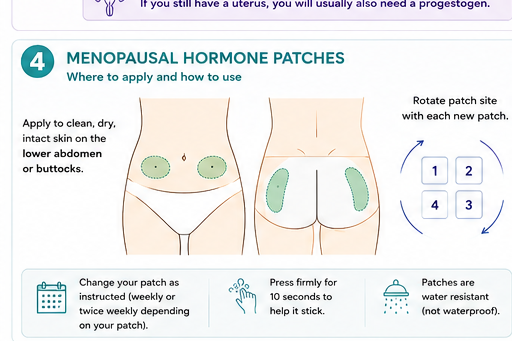
Hormone patch application and rotation sites — see panel 4 of the Arami Hormone Therapy Guide
Questions about your hormone patch?
Book a review appointment to optimise your menopausal hormone therapy.
Medical Disclaimer
This information is general in nature and does not replace professional medical advice. Always follow the specific instructions provided by your doctor or pharmacist, and refer to the Consumer Medicines Information (CMI) leaflet supplied with your medication. If you experience unexpected side effects or have concerns about your treatment, contact your healthcare provider promptly.