
Premenstrual Dysphoric Disorder (PMDD)
Understanding when PMDD symptoms occur, what to look for, and when to seek help
What is PMDD?
Premenstrual Dysphoric Disorder (PMDD) is a severe form of premenstrual syndrome (PMS) that significantly impacts daily functioning. It is characterised by intense emotional and physical symptoms that occur in the luteal phase of the menstrual cycle — the 1 to 2 weeks before your period — and resolve once menstruation begins.
PMDD is a recognised medical condition, not "just PMS". It affects approximately 3–8% of women of reproductive age and is highly treatable.
✅ PMDD vs PMS — what's the difference?
While PMS causes mild-to-moderate discomfort, PMDD causes severe symptoms that interfere with work, relationships, and daily activities. The key feature of PMDD is thecyclical, predictable timinglinked to the luteal phase, with a clear improvement after your period starts.
When Does PMDD Occur in Your Cycle?
Typical 28-Day Menstrual Cycle
- Period occurs in early days
- Oestrogen rises gradually
- Ovulation occurs around day 14
- PMDD symptoms resolve during this phase
- Progesterone peaks then falls
- Oestrogen also fluctuates
- PMDD symptoms appear and intensify
- Symptoms peak just before period
Common Symptoms of PMDD
Mood changes
Severe irritability, anger, sadness, or feelings of hopelessness that feel out of proportion.
Anxiety
Feeling on edge, tense, or overwhelmed. Heightened sensitivity to rejection or criticism.
Bloating
Abdominal bloating, breast tenderness, and fluid retention that worsen before your period.
Fatigue
Marked tiredness and difficulty concentrating that is worse than usual low-energy days.
Relationship impact
Symptoms that affect close relationships, work performance, or social activities.
Physical symptoms
Food cravings (especially carbohydrates), sleep changes, and headaches.
Diagnosing PMDD
Diagnosis is based on symptom tracking across at least two menstrual cycles. Your doctor may ask you to keep a daily symptom diary using a tool such as the Daily Record of Severity of Problems (DRSP).
The key diagnostic criteria (DSM-5) require at least 5 symptoms in the week before your period, with significant functional impairment, and clear symptom-free days in the follicular phase.
📅 Track your symptoms
Use a period tracking app or symptom diary to record how you feel each day throughout your cycle. This is invaluable for diagnosis and will help our team provide you with the most appropriate care.
Treatment Options
PMDD is highly treatable. Options may include:
Lifestyle modifications — regular aerobic exercise, balanced nutrition, reducing caffeine and alcohol, stress management
SSRIs (selective serotonin reuptake inhibitors) — can be taken daily or just in the luteal phase
Hormonal approaches — certain contraceptive pills, progesterone therapy, or ovarian suppression
Cognitive behavioural therapy (CBT) — evidence-based psychological support
Nutritional supplements — calcium (1200mg/day), magnesium, and vitamin B6 have some evidence of benefit
Reference Graphic
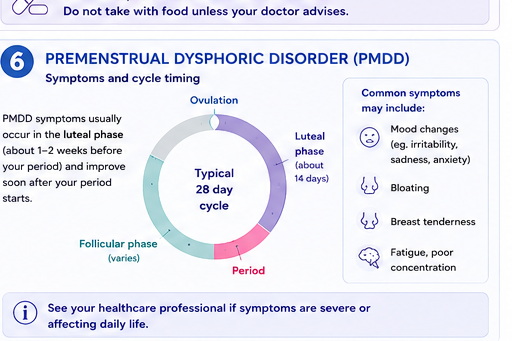
PMDD symptom timing in the menstrual cycle — see panel 6 of the Arami resource guide
Think you might have PMDD?
Our team specialises in PMDD diagnosis and management. Book a consultation to discuss your symptoms and explore treatment options.
Medical Disclaimer
This information is general in nature and does not replace professional medical advice. If you think you may have PMDD, please consult a qualified healthcare professional for proper assessment and individualised treatment planning.